Strategic planning for small businesses
A small business needs a clear view of where it wants to be, what is in the way, and which of its options gets it there. That fits on a few pages.
Watch the options drop away
Three ways forward for a fictional coffee roaster, tested against the same fitness criteria. The cafés go first, and wholesale is left standing.
A plan your bank can read
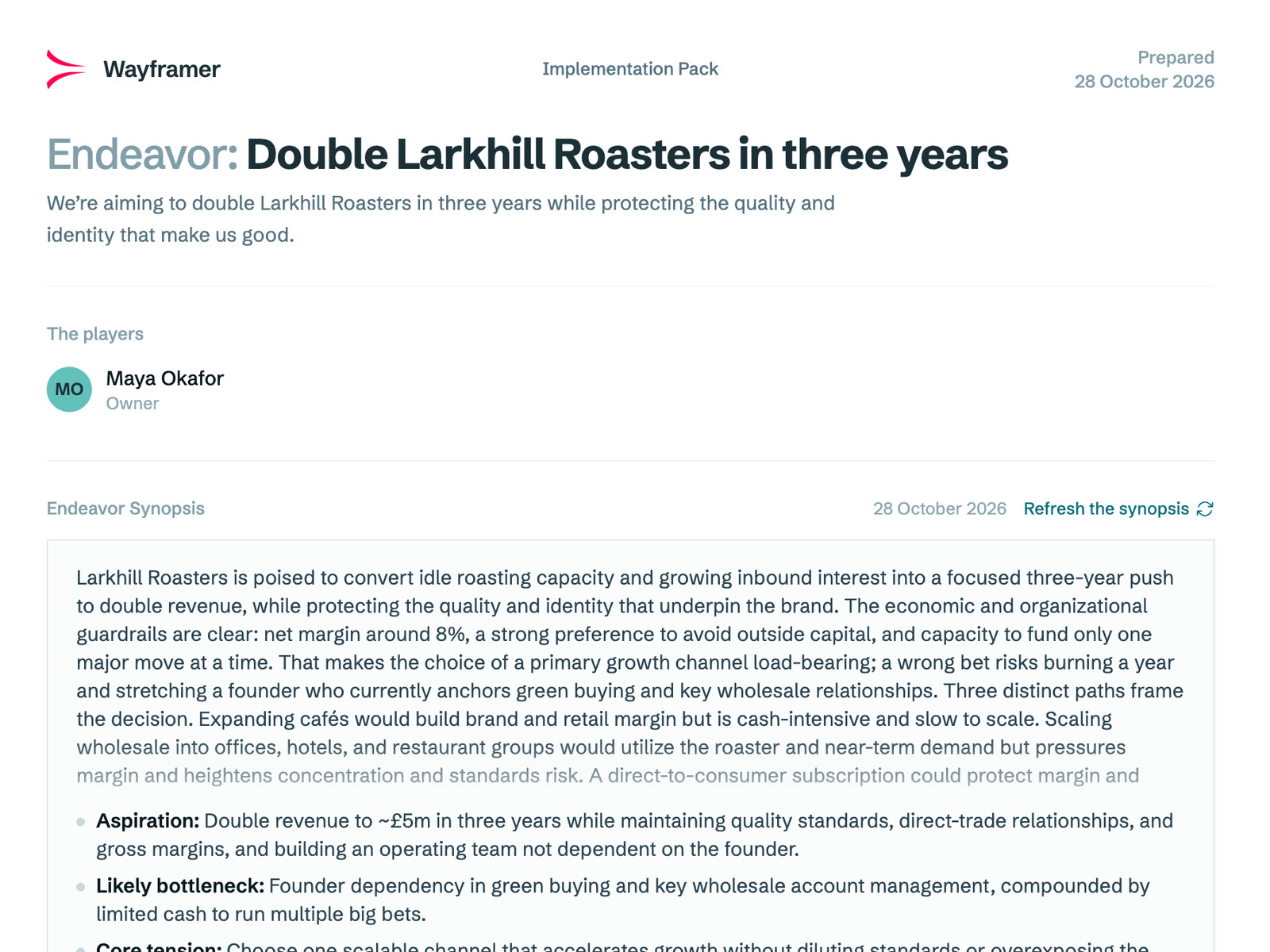
Locking the strategy produces the Implementation Pack: the choice, the reasoning and the work that delivers it, exported as a PDF for your team, your bank or investors.
When planning pays off
Small businesses usually run on the owner's judgement, and that judgement is often good. Planning helps when the business reaches a fork: a second site, a new channel, a big customer, a hire that changes the cost base. Those decisions are hard to reverse, and writing the options down before choosing tends to show risks that are easy to miss when it all stays in your head.
A plan in five steps
- Say where you want to be. Pick a specific aspiration with a time frame, such as doubling revenue in three years.
- Find what is holding you back. Cash, capacity, time, skills or demand: name the one that limits growth most.
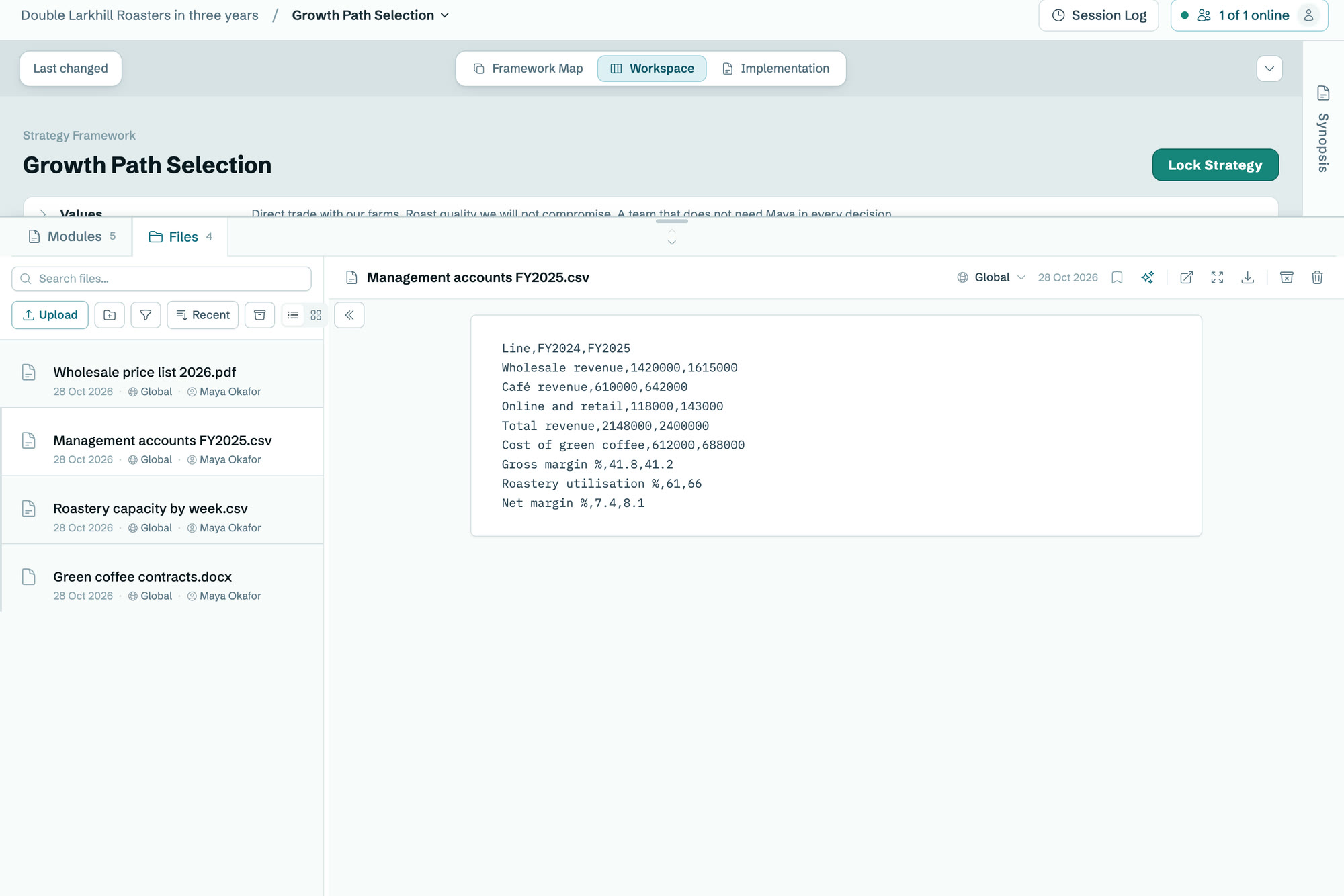
- List your real options. Write three or more different ways to get there. A coffee roaster might open more cafés, scale wholesale or start a subscription.
- Test each option against what matters. Margin, capital required, fit with your capacity, risk, and how quickly results arrive.
- Choose and write the plan. Take the option left standing, then list the initiatives, who owns each one and when it should show results.
A worked example
A fictional coffee roaster wants to double in three years. Opening cafés means fit-outs that strain limited cash, and a £180k site was already rejected. Scaling wholesale avoids fit-outs, answers inbound demand and uses spare roasting capacity. Tested against six fitness criteria, the cafés go first and wholesale is left standing, so the plan turns to working capital, a sales routine and deliveries.
How much time it takes
An owner and one or two key people can work through these steps in a few focused sessions. Review the plan every quarter, and sooner if something it depends on changes, such as a large customer leaving or costs rising.
Planning a small business strategy in Wayframer
Wayframer was built around this kind of decision. Huxley starts with a short conversation about your business, then works through the aspiration, the diagnosis and the alternatives with you. Upload your accounts, price list or capacity sheet, and Huxley draws on them once you say so. The result is an Implementation Pack you can export as a PDF and share with your team, your bank or investors.
Related guides
How to write a strategy. What a written strategy needs, a strategy statement, and tests to run on the draft.
The Strategy Alternatives Matrix. Set the ways forward side by side and test each against the same fitness criteria.
Strategic diagnosis. Say plainly what is in the way, and find the bottleneck that matters most.
Questions
Do small businesses need a strategic plan?
A short one helps whenever a hard-to-reverse decision comes up, such as a new site, a new channel or a major hire. A few pages covering the aspiration, the main obstacle, the options and the choice is enough for most.
What is the first step in strategic planning for a small business?
Decide where you want the business to be and by when, specifically enough that you will know when you get there.
How often should a small business review its strategy?
Every quarter, and whenever something the strategy depends on changes.
What is the difference between a business plan and a strategic plan?
A business plan describes the whole business, often for lenders or investors. A strategic plan focuses on the choice of direction and the work to carry it out.