Strategic planning for nonprofits
Nonprofits plan with tight funding, many stakeholders and goals that take years to show. A clear method keeps the plan honest about all three.
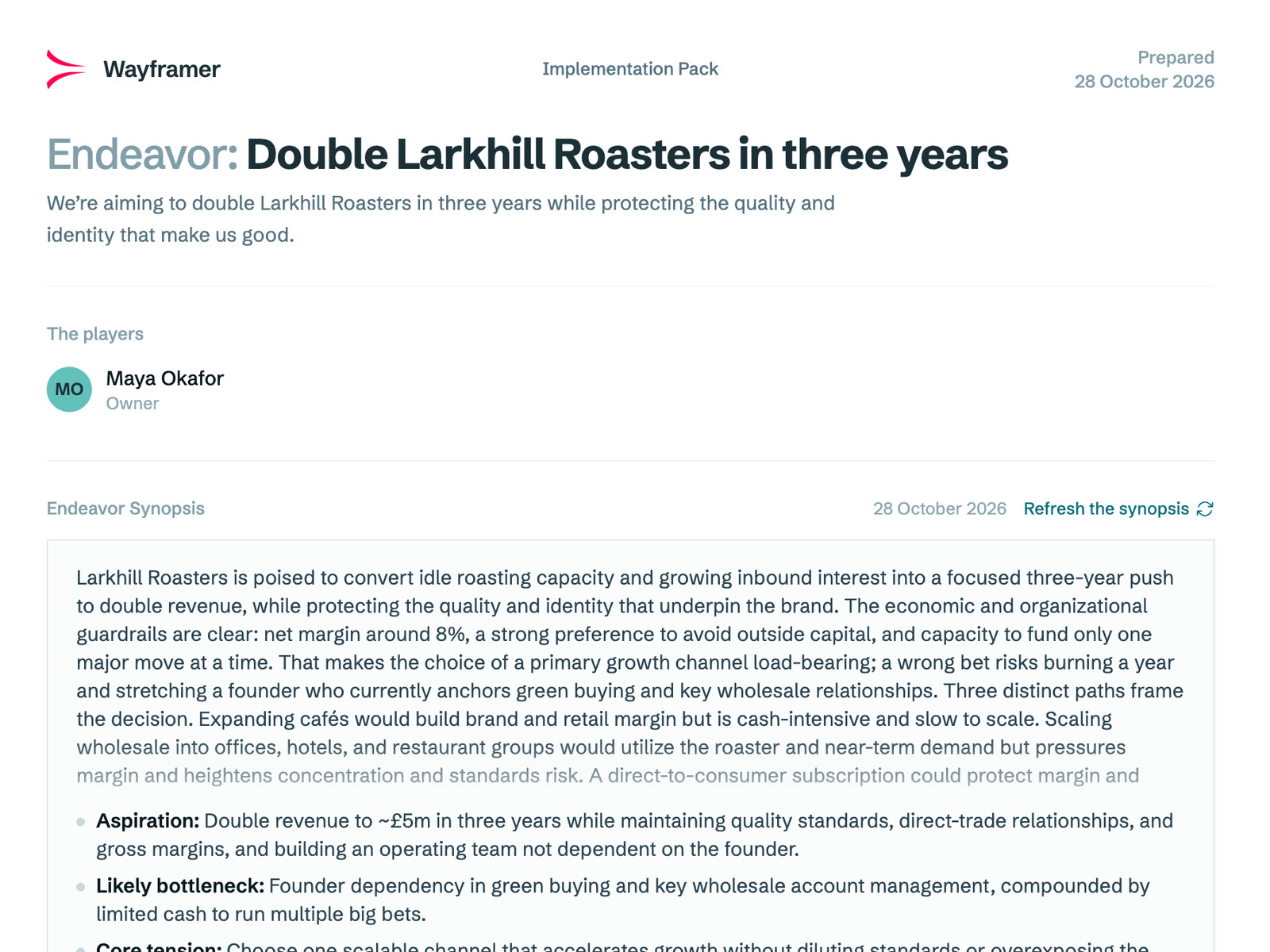
Show the board what was ruled out
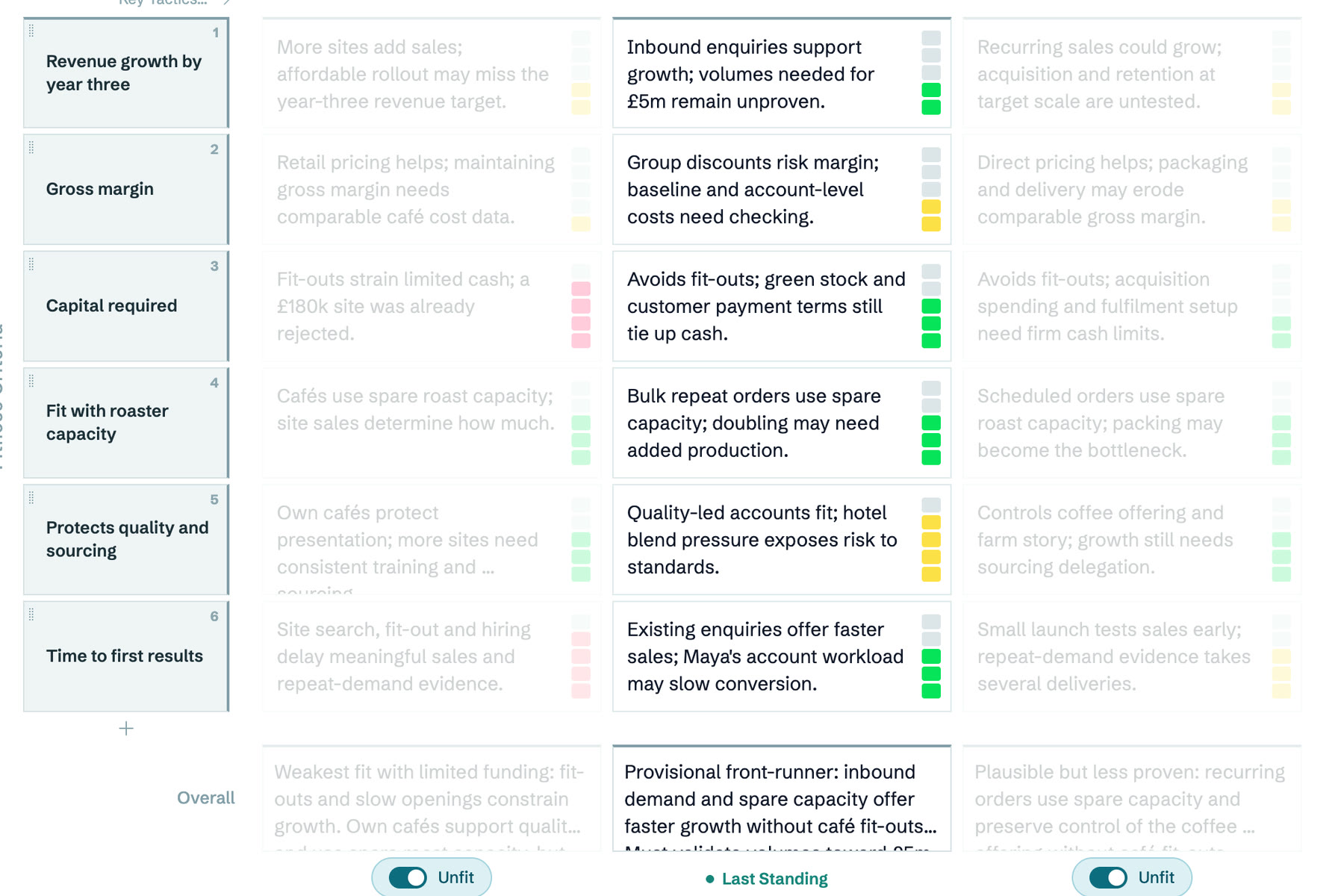
The Strategy Alternatives Matrix keeps every alternative you considered and the reason each one fell away, so trustees see the choice and the thinking behind it.
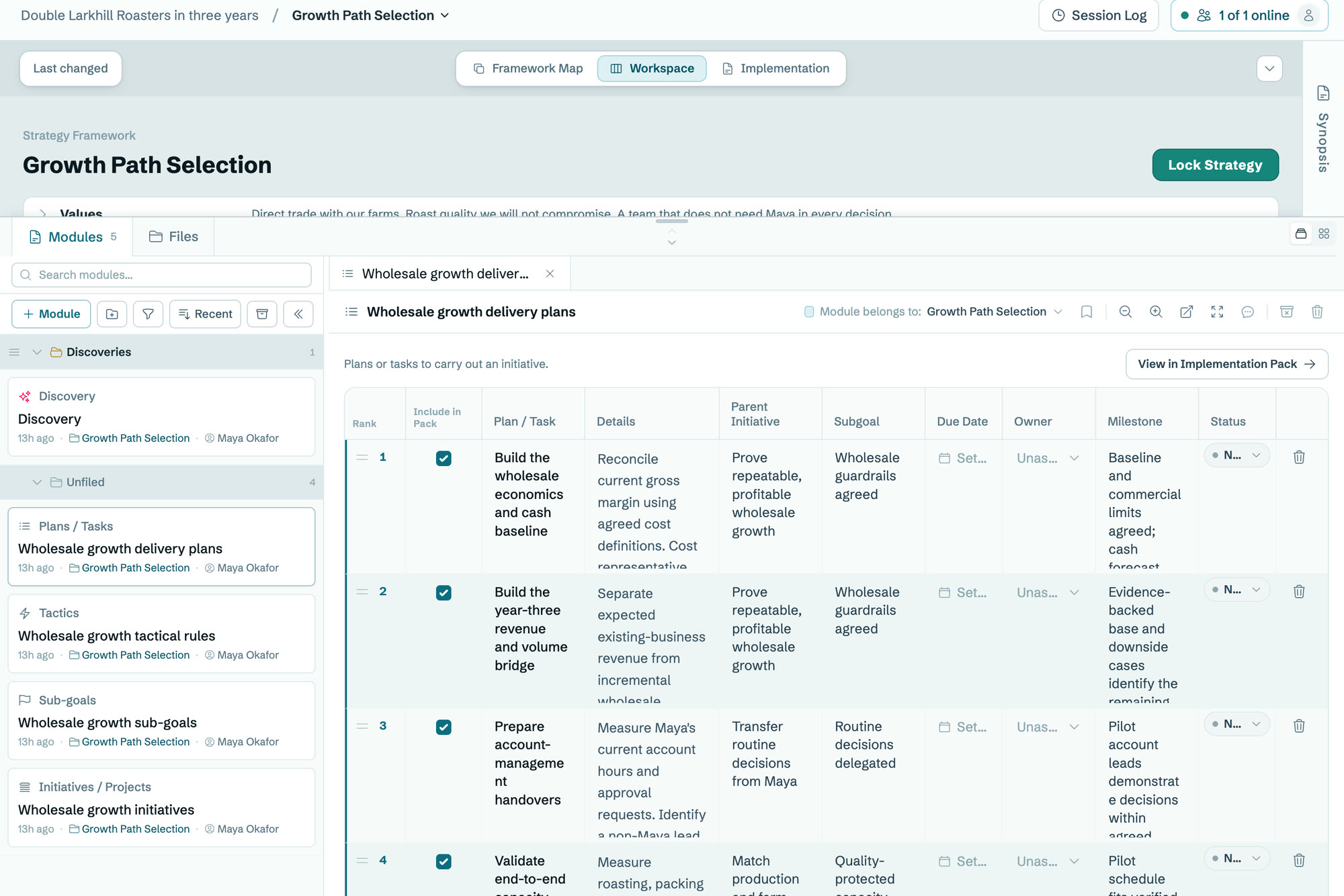
Work the board and staff share
Plans, sub-goals and initiatives sit in tables you and Huxley fill in together, each tied to the strategy it serves. Board members and staff can work in the same endeavor at the same time.
What makes nonprofit planning different
- Mission first. Every option has to serve the mission, which rules out some attractive sources of income.
- Many stakeholders. The board, staff, funders, volunteers and the people you serve all have a view, and the plan needs their trust.
- Restricted money. Grants often fund programmes and leave little for the capacity a new strategy needs.
- Impact takes time to show. Outcomes can take years, so the plan needs measures that show progress sooner.
A process that fits
- Agree the scope with the board. Decide which questions the plan will answer, over what period, and who decides.
- Restate values and mission. Write down what the organisation will hold to, whatever it chooses.
- Set the aspiration. Describe the change you want to see in three to five years, specifically enough to recognise it.
- Diagnose what is in the way. Funding, capacity, reach, partnerships or policy: name the bottleneck that matters most. See strategic diagnosis.
- Compare real alternatives. For example, grow a flagship programme, partner with a larger organisation, or shift effort to advocacy. Test each against the same criteria, including mission fit and what funders will support.
- Choose and plan. Turn the chosen strategy into initiatives with owners, milestones and measures.
- Review with the board. Check progress each quarter, and revisit the strategy when its assumptions change.
Criteria worth using
Useful fitness criteria for a nonprofit include mission fit, impact on the people you serve, funding the organisation can realistically secure, staff and volunteer capacity, standing with partners, and the risk to existing programmes. See how to evaluate strategic options.
Bringing the board along
A board approves a strategy more readily when it can see the alternatives that were considered and why they were ruled out. Writing the reasoning down also gives new trustees and funders the full story without another round of meetings.
Using Wayframer for a nonprofit plan
Wayframer takes a team through each step: values, aspiration, diagnosis and strategy alternatives, with the Strategy Alternatives Matrix to test the options. Board members and staff can work in the same endeavor at the same time, and the Implementation Pack, exported as a PDF, gives the board and funders the strategy, its reasoning and the plan that delivers it.
Related guides
The strategic planning process. Seven steps from a goal to a strategy the team can test and keep using.
How to evaluate strategic options. Criteria and a step-by-step method for comparing ways forward and choosing one.
Strategic diagnosis. Say plainly what is in the way, and find the bottleneck that matters most.
Questions
What are the steps of nonprofit strategic planning?
Agree the scope with the board, restate values and mission, set the aspiration, diagnose what is in the way, compare real alternatives, choose and plan the work, and review progress with the board.
How many years should a nonprofit strategic plan cover?
Three to five years is common, with a yearly plan inside it. Organisations in fast-changing funding or policy environments often choose the shorter end.
Who should be involved in a nonprofit strategic plan?
The executive director and the board lead it, with the staff who run programmes. Funders, partners and the people you serve are worth hearing at the diagnosis and alternatives stages.
How do you measure a nonprofit strategy?
Pair long-term outcome measures with indicators that move within months, such as reach, partner commitments or funding secured for the new direction.