The strategic planning process
A strategic planning process should leave a team with a strategy it can test and adjust as conditions change. Here are the steps, in order.
Why the process matters
Strategic planning is the work of deciding where an organisation is going and how it will get there. The classic process runs once a year: analyse the environment, set a mission and goals, write a plan, cascade it and review it next year. Henry Mintzberg's research found that strategies formed this way rarely survive contact with real conditions, because the world changes between reviews. A good process builds in the means to adjust, and emergent strategy explains the idea behind that.
Seven steps
1. Frame the endeavor
Name the goal the strategy serves and its time frame, such as doubling the business in three years. Agree who is involved and which decisions are in scope.
2. State your values
Write down what the organisation will hold to whatever strategy it picks. Values rule some options out before anyone spends time on them.
3. Set the aspiration
Describe where you want to be, specifically enough that you will know when you get there.
4. Diagnose what is in the way
Explain the situation and name the bottleneck, the thing that most limits progress. See strategic diagnosis.
5. Develop and test alternatives
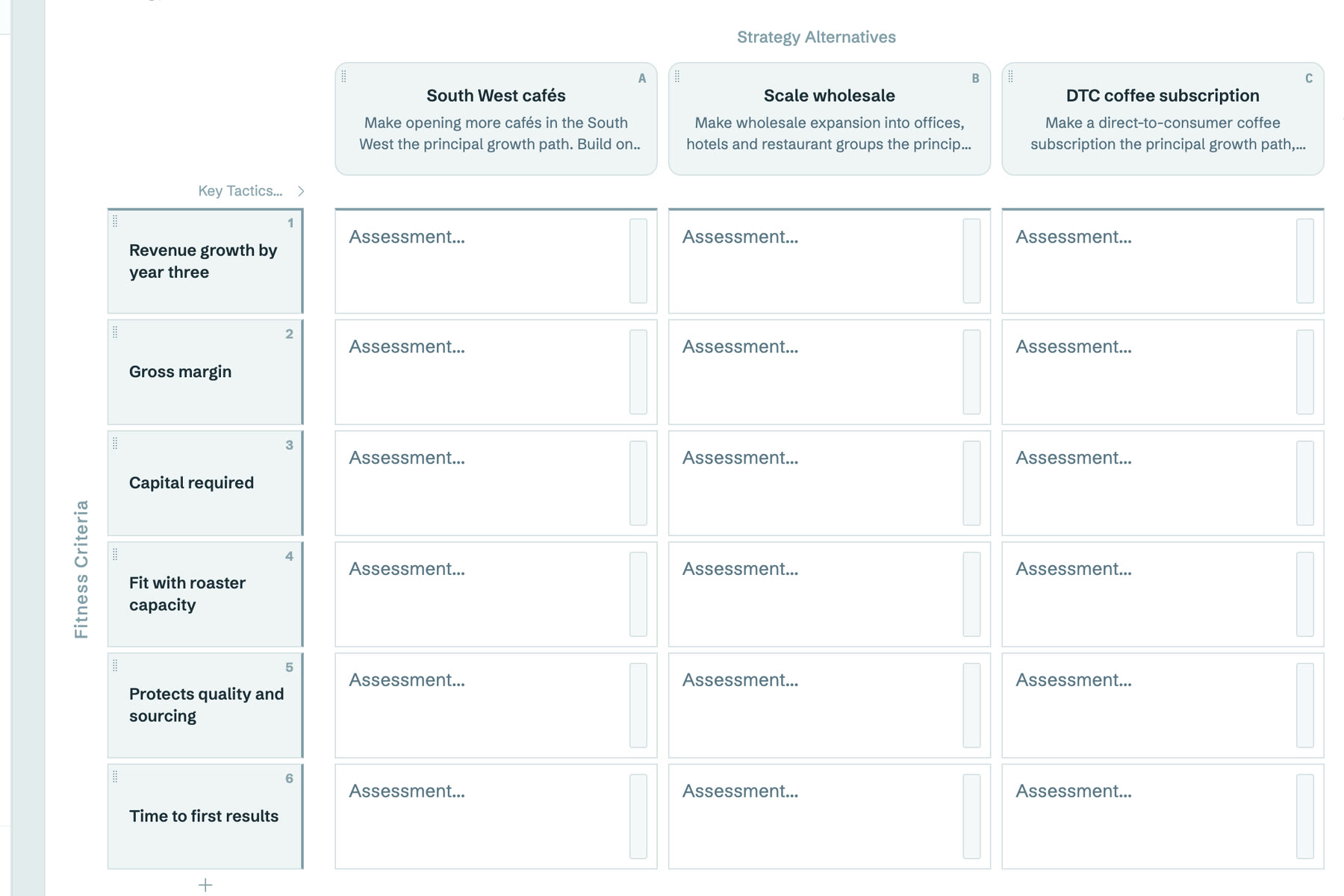
Write three or more genuinely different ways forward and test each against the same fitness criteria. Rule out what cannot fit. See how to evaluate strategic options.
6. Choose and plan the work
Lock the alternative left standing and turn it into plans, tactics and initiatives with owners. See the strategy implementation plan.
7. Review against reality
Set a rhythm for checking the strategy against what is happening. When a fitness criterion stops holding, reopen the choice it supported.
Who should be involved
Include the people who hold the knowledge the decision needs: those closest to customers, operations and the numbers, alongside the leaders who will be accountable. A core team of four to eight people works well, consulting others at the diagnosis and alternatives steps, where wider knowledge helps most.
How long it takes
A focused team can work through the first six steps for one strategic question in a few working sessions, or in one well-prepared day, as this strategy workshop agenda lays out. A whole-organisation strategy with several frameworks takes longer, often a few weeks. The review in step seven carries on and becomes part of how the organisation runs.
Running the process in Wayframer
Wayframer follows these steps. A new endeavor opens with a short discovery conversation with Huxley. The framework map breaks the endeavor into strategy frameworks, and each framework's workspace holds its values, aspiration, diagnosis and strategy alternatives. Locking a strategy gathers the endeavor, the framework, the alternatives and the plans that deliver it into the Implementation Pack, which you can export as a PDF for the team.
Related guides
Emergent strategy. What Henry Mintzberg meant, and how deliberate and emergent strategy fit together.
How to evaluate strategic options. Criteria and a step-by-step method for comparing ways forward and choosing one.
Strategy implementation plan. What to put in the plan that turns a chosen strategy into work.
Questions
What are the steps in the strategic planning process?
Frame the goal, state your values, set the aspiration, diagnose what is in the way, develop and test alternatives, choose and plan the work, and review the strategy against what happens.
How often should a strategic plan be reviewed?
Check progress at least quarterly, and revisit the strategy itself whenever something it depends on changes, such as a fitness criterion that no longer holds. A yearly review alone is too slow for most markets.
What is the difference between strategy and strategic planning?
Strategy is the choice of how to reach an aspiration. Strategic planning is the process of making that choice and organising the work to carry it out.
Who should lead strategic planning?
The leader accountable for the outcome should own it, with a small core team doing the work and a facilitator if the group needs one.